
Introduction
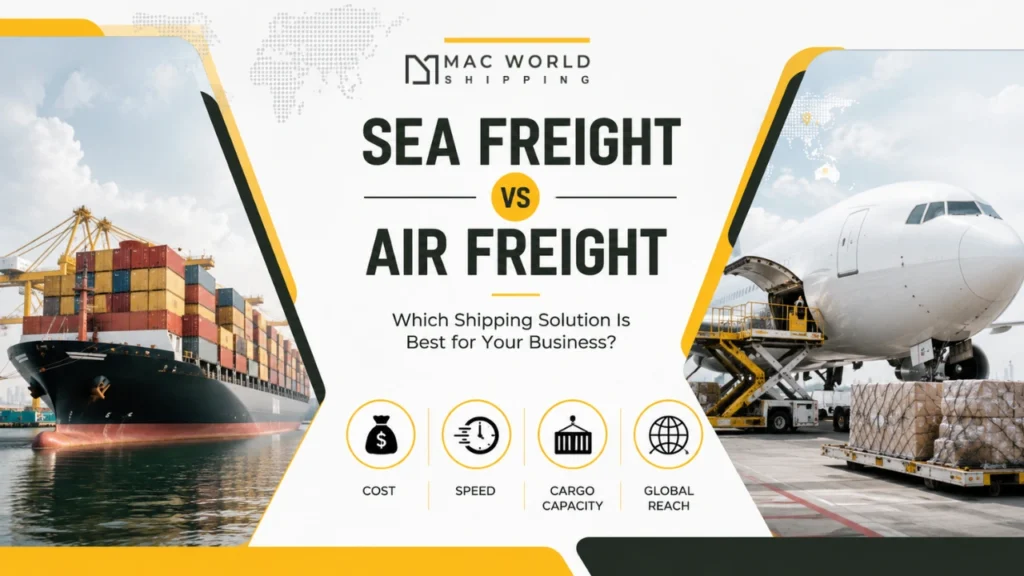
Choosing the right shipping method is one of the most important decisions businesses make when managing international logistics. Whether you are importing raw materials, exporting finished goods, or expanding into new global markets, selecting between sea freight and air freight can significantly impact costs, delivery times, and customer satisfaction.
When evaluating Sea Freight Dubai vs Air Freight, businesses must consider multiple factors, including shipment size, urgency, budget, cargo type, and supply chain objectives. Dubai has become one of the world’s leading logistics hubs, offering excellent connectivity through both maritime and aviation networks.
As global trade continues to evolve, understanding the differences between these shipping methods helps businesses make informed decisions that support growth and operational efficiency. This guide explores the advantages, disadvantages, and ideal use cases for both options to help determine which solution best fits your business needs.
Understanding Sea Freight and Air Freight
Before comparing Sea Freight Dubai vs Air Freight, it is important to understand how each transportation method works.
What Is Sea Freight?
Sea freight involves transporting cargo via ocean vessels using containers or specialized shipping equipment. It is one of the most widely used methods for international trade due to its affordability and ability to handle large cargo volumes.
Sea freight services typically include:
- Full Container Load (FCL)
- Less than Container Load (LCL)
- Breakbulk cargo
- Project cargo
- Heavy equipment transportation
Sea freight is ideal for businesses that prioritize cost savings over delivery speed.
What Is Air Freight?
Air freight refers to transporting goods through commercial airlines or dedicated cargo aircraft.
Air freight services are commonly used for:
- Time-sensitive shipments
- High-value products
- Perishable goods
- Medical supplies
- Urgent inventory replenishment
Air freight provides significantly faster transit times compared to sea freight but generally comes with higher shipping costs.
Sea Freight Dubai vs Air Freight: Key Differences
Understanding the key differences between Sea Freight Dubai vs Air Freight can help businesses select the most suitable logistics solution.
Shipping Cost
Cost is often the first factor businesses evaluate.
Sea Freight Cost Advantages
Sea freight is generally the most economical option for international shipping, especially for:
- Bulk cargo
- Heavy goods
- Large shipments
- Non-urgent deliveries
Businesses transporting large quantities of products can achieve substantial savings through sea freight.
Air Freight Cost Considerations
Air freight is considerably more expensive because costs are based on:
- Cargo weight
- Cargo volume
- Fuel expenses
- Airport handling fees
While more costly, air freight offers speed and reliability that can justify the investment for urgent shipments.
Delivery Speed
One of the biggest differences in the Sea Freight Dubai vs Air Freight comparison is transit time.
Air Freight Delivery Speed
Air freight offers rapid transportation, often delivering shipments within:
- 1–3 days internationally
- 24–48 hours regionally
This makes air freight ideal for urgent business requirements.
Sea Freight Transit Time
Sea freight typically requires:
- Several days to several weeks
- Longer customs and port processing times
Although slower, sea freight remains suitable for planned inventory replenishment and bulk cargo movement.
Which Option Is Better for Large Shipments?
Sea Freight for Bulk Cargo
Sea freight is highly efficient for transporting:
- Industrial equipment
- Machinery
- Construction materials
- Consumer goods in large quantities
Containerized shipping allows businesses to move significant cargo volumes at relatively low costs.
Air Freight Capacity Limitations
Aircraft cargo space is limited compared to cargo vessels.
Very large or oversized shipments may:
- Exceed aircraft capacity restrictions
- Incur substantial shipping costs
- Require specialized handling
For this reason, sea freight is often preferred for large-scale shipments.
Cargo Types and Shipping Requirements
When considering Sea Freight Dubai vs Air Freight, cargo characteristics play a major role.
Products Best Suited for Air Freight
Air freight is ideal for:
- Electronics
- Luxury goods
- Pharmaceuticals
- Medical equipment
- Perishable products
- Fashion items
These products often require fast transportation and enhanced security.
Products Best Suited for Sea Freight
Sea freight is commonly used for:
- Furniture
- Industrial machinery
- Building materials
- Automotive parts
- Consumer goods
- Bulk commodities
These products can tolerate longer transit times and benefit from lower transportation costs.
Reliability and Scheduling
Air Freight Reliability
Airlines generally operate on fixed schedules with predictable departure and arrival times.
Benefits include:
- Reduced transit uncertainty
- Faster customs processing
- Better shipment visibility
This reliability supports businesses that depend on strict delivery timelines.
Sea Freight Scheduling Challenges
Sea freight schedules can sometimes be affected by:
- Weather conditions
- Port congestion
- Customs delays
- Vessel scheduling adjustments
However, proper logistics planning can help mitigate these challenges.
Environmental Impact
Sustainability is becoming increasingly important in supply chain management.
Sea Freight Sustainability
Sea freight typically produces lower carbon emissions per ton of cargo transported compared to air freight.
For businesses pursuing sustainability goals, sea freight may be the more environmentally responsible option.
Air Freight Carbon Footprint
Air transportation generates significantly higher emissions due to fuel consumption and aircraft operations.
While air freight offers speed, businesses should consider its environmental impact when evaluating shipping options.
Sea Freight Dubai vs Air Freight for E-Commerce Businesses
The growth of e-commerce has transformed shipping requirements.
When E-Commerce Businesses Choose Air Freight
Air freight is often selected for:
- Fast-moving products
- Urgent stock replenishment
- Seasonal inventory requirements
- Premium customer delivery options
Fast shipping can enhance customer satisfaction and competitive positioning.
When E-Commerce Businesses Choose Sea Freight
Sea freight is preferred for:
- Inventory restocking
- Bulk product imports
- Cost-effective logistics planning
Many e-commerce companies use a combination of both shipping methods to balance speed and cost.
Dubai's Strategic Advantage in Global Shipping
Dubai serves as one of the world’s most important logistics gateways.
World-Class Ports
Dubai’s maritime infrastructure supports efficient sea freight operations through:
- Modern container terminals
- Advanced cargo handling facilities
- Global shipping connections
International Airports
Dubai’s airports provide:
- Extensive cargo capacity
- Fast customs clearance
- Global air freight connectivity
This dual advantage makes Dubai a leading choice for international logistics operations.
Factors to Consider When Choosing Between Sea Freight and Air Freight
Choose Sea Freight If:
- Cost reduction is a priority
- Shipments are large or heavy
- Delivery timelines are flexible
- Sustainability is important
Choose Air Freight If:
- Speed is critical
- Products are high value
- Inventory shortages must be avoided
- Customer delivery expectations are urgent
Why Businesses Often Use Both Solutions
Many successful businesses do not rely exclusively on one shipping method.
A balanced logistics strategy may involve:
- Sea freight for routine inventory replenishment
- Air freight for urgent orders
- Hybrid logistics planning
Combining both methods helps optimize costs while maintaining operational flexibility.
Conclusion
When evaluating Sea Freight Dubai vs Air Freight, there is no one-size-fits-all solution. The best choice depends on your business objectives, budget, shipment size, cargo type, and delivery requirements.
Sea freight remains the preferred option for businesses seeking cost-effective transportation of large shipments, while air freight offers unmatched speed for urgent and high-value cargo. Dubai’s world-class logistics infrastructure supports both shipping methods, enabling businesses to access global markets efficiently.
By carefully assessing supply chain needs and working with an experienced logistics partner, businesses can develop a shipping strategy that optimizes costs, improves customer satisfaction, and supports long-term growth. Understanding the strengths of Sea Freight Dubai vs Air Freight allows organizations to make informed decisions and remain competitive in today’s global marketplace.