Mac World Shipping

Blog

Warehouse and Distribution
Blog

Beyond Storage: What Full-Service Warehousing & Distribution Really Means

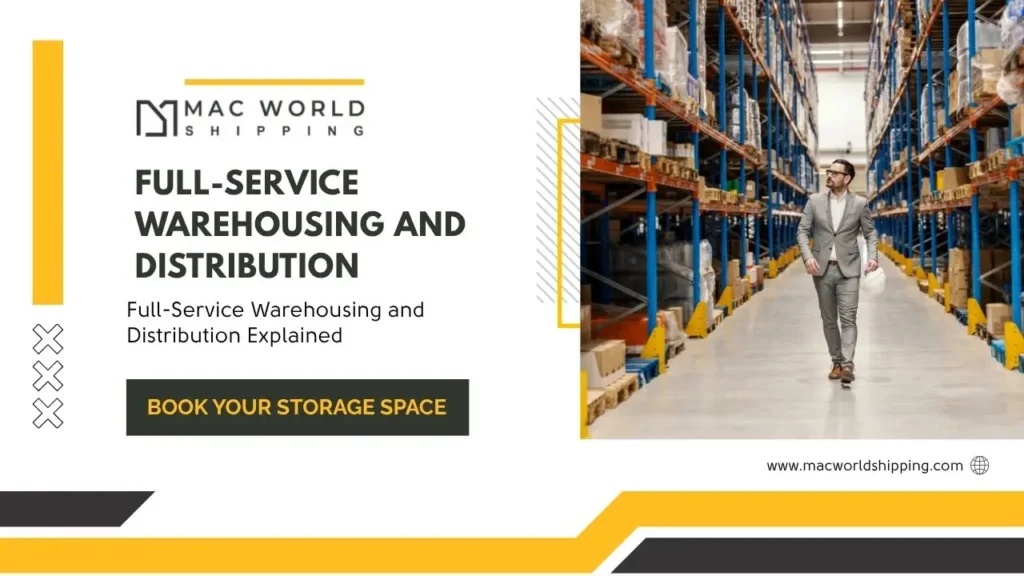
Introduction For a long time, “warehousing” meant one thing: a building where products sit until someone comes to pick them up. That model still exists, but it’s increasingly outdated for businesses trying to compete on speed, reliability, and cost. Today, full-service warehousing and distribution covers far more than storage — it’s an entire operational layer that connects inventory, transportation, technology, and customer delivery into one coordinated system. If your current provider only offers space and a forklift, you might be missing out on the efficiency gains that a truly integrated logistics partner can provide. Here’s what full-service warehousing and distribution actually includes — and why the difference matters for your bottom line. The Old Model vs. the Full-Service Model Traditional storage providers rent you square footage. You bring goods in, they sit until you arrange transport, and the provider’s responsibility largely ends there. It works, but it leaves you managing multiple vendors, coordinating separate transport arrangements, and absorbing the inefficiencies that come from disconnected systems. Full-service warehousing and distribution flips that model. Instead of treating storage and delivery as separate problems, a single provider manages the entire flow — receiving, storing, picking, packing, and delivering — under one coordinated operation. The result is fewer handoffs, fewer delays, and far less administrative burden on your team. Inventory Management That Goes Beyond Shelving A full-service warehouse doesn’t just hold your products; it actively manages them. That means real-time inventory tracking, automated stock alerts when levels run low, and accurate reporting that lets you make decisions based on actual data rather than guesswork. This matters most during high-demand periods. Businesses relying on manual stock checks or outdated spreadsheets often discover shortages too late — after a customer order can’t be fulfilled. Integrated inventory systems catch these gaps before they become lost sales. Order Fulfillment as Part of the Warehouse’s Job In a full-service setup, the warehouse doesn’t just store your goods — it prepares them for delivery. That includes picking and packing orders accurately, labeling for compliance or customs requirements, and staging shipments so they’re ready to move the moment transport arrives. This is a meaningful shift from traditional storage, where fulfillment tasks often fall back on the business itself or get outsourced to a separate provider. Consolidating fulfillment into the warehouse operation reduces errors and speeds up the time between an order being placed and it reaching the customer. Transportation Built Into the Same System Perhaps the biggest difference between basic storage and full-service warehousing and distribution is transportation. Rather than coordinating a separate trucking company after goods leave the warehouse, a full-service provider manages delivery as a continuation of the same process — same systems, same accountability, same visibility. This integration reduces the handoff delays that typically occur when storage and transport are managed by different companies. It also means if something goes wrong, there’s one point of contact responsible for resolving it, rather than each party pointing to the other. Technology That Connects Every Step Modern full-service logistics depends on systems that talk to each other. Warehouse management software, transportation tracking, and customer-facing order updates should all pull from the same data, so you — and your customers — always know exactly where a shipment stands. Businesses without this visibility often deal with support tickets and manual status checks that eat up time and frustrate customers. A connected system solves this by making tracking automatic rather than something someone has to chase down. Flexibility to Scale Without Renegotiating Everything One of the biggest advantages of full-service warehousing and distribution is flexibility. Seasonal demand, new market entry, or sudden growth shouldn’t require a completely new logistics setup. A full-service provider can flex storage space, staffing, and transport capacity up or down based on what your business actually needs at any given time. This is especially valuable for businesses trading across multiple regions — like the UAE, China, and Saudi Arabia — where demand can shift quickly and rigid, storage-only contracts often can’t keep pace. Compliance and Documentation Handled in One Place Cross-border and regional trade comes with paperwork: customs documentation, product labeling requirements, and regulatory compliance that varies by destination. A full-service provider with logistics expertise handles this as part of the process, rather than leaving your team to manage it separately from storage and delivery. This reduces the risk of shipments getting delayed at customs or flagged for documentation errors — a common and costly problem for businesses managing storage and transport through disconnected vendors. Common Challenges Businesses Face Without Contract Logistics Companies managing logistics independently often struggle with: High operational costs Inventory inaccuracies Delivery delays Limited scalability Resource shortages As businesses grow, these challenges become more difficult to manage internally. Contract logistics providers help eliminate these operational bottlenecks. Future Trends in Contract Logistics (2026 and Beyond) Mac World Shipping provides comprehensive contract logistics solutions tailored to the needs of modern businesses. Services include: Warehouse storage solutions Private warehouse facilities Inventory management Fulfillment services Distribution support Refrigerated storage Transportation coordination By partnering with Mac World Shipping, businesses can simplify logistics operations, improve efficiency, and focus on growth while experienced professionals manage their supply chain requirements. Conclusion Mac World Shipping brings warehousing, fulfillment, transportation, and compliance together under one coordinated operation — built for businesses trading across the UAE, China, and Saudi Arabia. Instead of managing separate vendors for storage and delivery, businesses get one accountable partner handling the full journey from receiving to final delivery. If your current logistics setup feels like a patchwork of separate vendors and manual coordination, it might be time for a system that actually works together. Get in touch with Mac World Shipping today to see what full-service warehousing and distribution can do for your business. Contact Us
Refrigerated Storage in Al Quoz, Dubai
Blog

Refrigerated Storage & Distribution in Al Quoz, Dubai — Why It Matters for Your Business

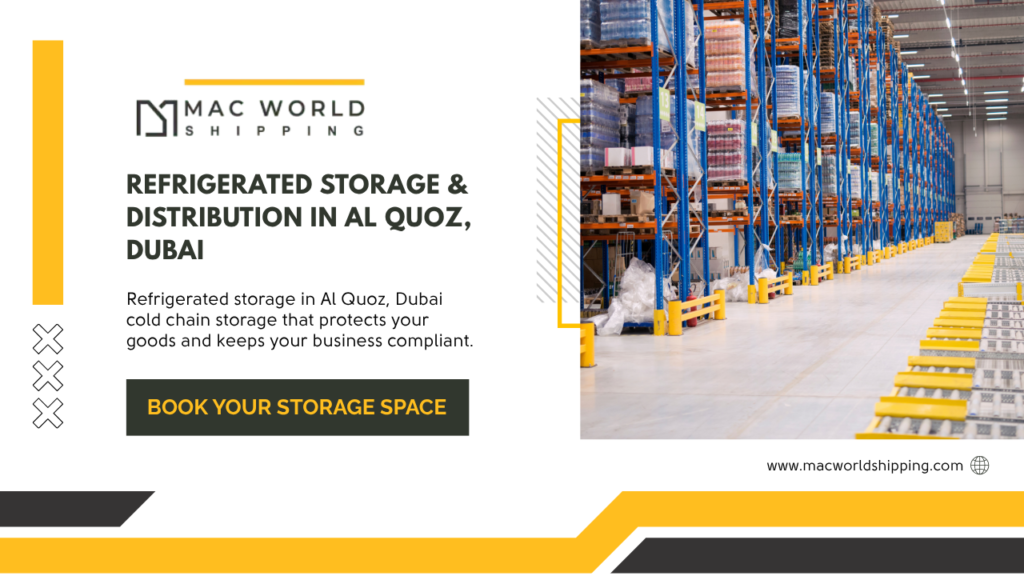
Introduction Al Quoz has quietly become one of Dubai’s most important logistics zones — a mix of industrial warehousing, trading companies, and distribution hubs that keep goods moving across the city and beyond. For businesses dealing in perishables, pharmaceuticals, or temperature-sensitive products, refrigerated storage in Al Quoz, Dubai isn’t a nice-to-have. It’s the difference between a product that reaches customers in perfect condition and one that arrives spoiled, degraded, or simply unsellable. If you’re weighing whether cold storage is worth the investment for your supply chain, here’s why it matters more than most businesses realize — and what to look for when choosing a provider in this part of Dubai. Why Al Quoz Has Become a Cold Storage Hotspot Al Quoz sits close to major highways and central Dubai, making it a practical middle ground between the ports, the airport, and the retail and hospitality businesses that need fast, reliable delivery. That location advantage means a refrigerated facility here can serve florists, restaurants, grocery chains, and pharmaceutical distributors without the long transit times that eat into a product’s shelf life. For businesses moving temperature-sensitive goods through the UAE, China, and Saudi Arabia trade corridors, having refrigerated storage and distribution based in Al Quoz shortens the gap between “goods arrive” and “goods reach the customer” — and in cold chain logistics, every hour counts. The Real Cost of Getting Cold Storage Wrong Dubai’s climate isn’t forgiving. Outside temperatures regularly climb past 40°C for much of the year, and any break in the cold chain — even a short one — can ruin perishable inventory. Spoiled stock isn’t just a lost product; it’s lost revenue, wasted transport costs, and in some cases, damaged relationships with retail or restaurant clients who expected reliable delivery. For regulated goods like pharmaceuticals or certain food categories, a broken cold chain can also mean compliance violations, which carry their own financial and reputational risks. Businesses that treat refrigerated storage as an afterthought often only realize its importance after a costly failure — a shipment that arrives unusable, a client relationship that doesn’t survive one bad delivery. What Proper Refrigerated Storage Actually Requires         Not every facility that claims “cold storage” is equipped to handle it well. A genuinely reliable setup needs several things working together: Consistent temperature control. The facility should maintain precise ranges suited to your product — frozen, chilled, or controlled ambient — with monitoring systems that track conditions continuously, not just at intake. Backup power. Dubai’s grid is generally stable, but any refrigerated operation without backup generators is one outage away from disaster. Ask specifically how power interruptions are handled. Humidity management. Temperature alone isn’t enough for many perishables. Proper humidity control prevents spoilage that temperature control alone won’t catch. Fast loading and unloading. Every minute a product spends outside cold storage during transfer adds risk. Facilities with efficient dock processes and short handling windows protect product quality far better than ones where goods sit exposed during transitions. If a provider can’t clearly explain how they manage these four elements, that’s a warning sign worth taking seriously. Distribution Speed Matters as Much as Storage Refrigerated storage only solves half the problem. The other half is getting that product from the warehouse to its destination while it’s still cold. A facility with excellent storage but a slow, unreliable distribution network still puts your product at risk during the final leg of the journey. Look for a provider that treats storage and distribution as one connected process — refrigerated trucks, short transit windows, and delivery scheduling built around keeping the cold chain intact from warehouse to doorstep. Businesses serving restaurants, florists, or grocery retailers in particular need this kind of end-to-end reliability, since these customers often have narrow delivery windows and little tolerance for delays. Scalability for Seasonal and Growing Demand Demand for refrigerated goods isn’t constant. Retail seasons, holidays, and trade cycles across the UAE, China, and Saudi Arabia create spikes that a rigid storage contract can’t always absorb. A good refrigerated storage and distribution partner should be able to scale capacity up during busy periods and back down when things slow, without forcing you into inflexible long-term commitments. This flexibility matters especially for businesses still growing their customer base, where storage needs this quarter may look very different from needs six months from now. Compliance and Documentation for Regulated Goods Cold chain logistics in the UAE often intersects with regulatory requirements — food safety standards, pharmaceutical handling rules, and import documentation specific to temperature-sensitive goods. A provider with real experience in Al Quoz’s logistics environment will understand these requirements and help you stay compliant, rather than leaving you to figure it out shipment by shipment. This is where local expertise pays off. A facility that’s handled cold chain goods across multiple industries will spot compliance risks before they turn into fines or held shipments at customs. Choosing the Right Partner When evaluating refrigerated storage and distribution options in Al Quoz, ask direct questions: What temperature ranges can you guarantee? What happens during a power outage? How fast can goods move from storage to delivery? What’s your track record with businesses similar to mine? A provider that answers these clearly, without vague reassurances, is one worth trusting with products that can’t afford to be mishandled. How Mac World Shipping Supports Cold Chain Businesses Mac World Shipping operates refrigerated storage and distribution in Al Quoz, Dubai, built specifically for businesses that can’t risk a broken cold chain — from florists needing consistent freshness to distributors moving temperature-sensitive goods across UAE, China, and Saudi Arabia trade routes. Reliable temperature control, efficient handling, and distribution designed to protect product quality from warehouse to final delivery are at the center of how the service works. If cold chain reliability has been a weak point in your supply chain, it’s worth having a conversation before the next shipment is at risk. Get in touch with Mac World Shipping today to discuss refrigerated storage and distribution solutions

Integrated warehouse and transportation
Blog

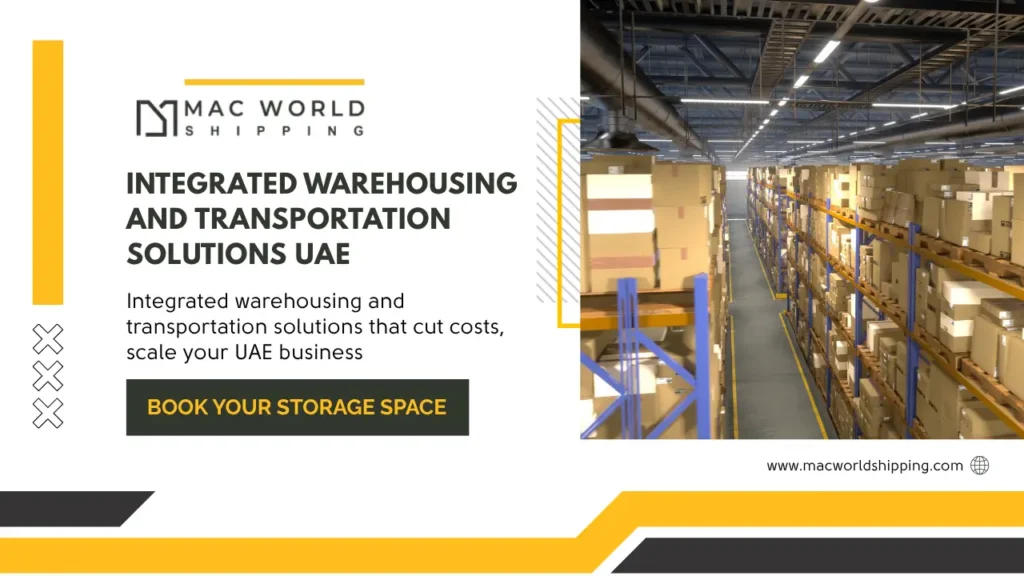
Integrated Warehousing and Transportation Solutions UAE

Introduction      Running a business in the UAE today means competing in one of the fastest-moving trade hubs in the world. Customers expect next-day delivery, retailers demand tighter restocking windows, and e-commerce sellers need inventory that moves the moment an order comes in. Yet many companies still manage warehousing and transportation as two separate functions — different vendors, different systems, different timelines. The result is wasted time, higher costs, and shipments that sit idle between storage and delivery. This is exactly where integrated warehousing and transportation solutions make the difference. By combining storage, inventory management, and freight movement under one coordinated system, UAE businesses can cut handling delays, lower logistics costs, and respond faster to market demand. In this guide, we’ll break down what integrated logistics actually means, why it matters for businesses operating in and around Dubai, and how to choose a provider that can deliver both sides of the equation seamlessly. What Are Integrated Warehousing and Transportation Solutions? Integrated warehousing and transportation solutions bring storage and shipping together under a single, connected logistics operation. Instead of a business coordinating a warehouse provider and a separate freight company, one partner manages the entire flow — from the moment goods arrive at the facility to the moment they reach the customer’s door. This typically includes: Inventory storage and management in a centrally located warehouse Order picking, packing, and fulfillment Land, air, or sea freight coordination for onward delivery Real-time tracking across both storage and transit Customs clearance and documentation support for cross-border shipments When these pieces are managed together, businesses avoid the communication gaps and scheduling conflicts that come from juggling multiple vendors. Why UAE Businesses Need Integrated Logistics in 2026 1. Faster Order-to-Delivery Cycles When warehousing and transportation operate on separate systems, every handoff adds delay — a truck waiting for paperwork, a shipment sitting in storage longer than necessary. An integrated model removes these gaps, so goods move from shelf to vehicle to customer without unnecessary downtime. 2. Lower Operational Costs Coordinating storage and freight through one provider reduces duplicate administrative work, minimizes double-handling of goods, and often unlocks better freight rates through consolidated shipping volumes. Businesses typically see meaningful savings once storage and transport are planned together rather than booked separately. 3. Better Visibility Across the Supply Chain With one system managing both inventory and shipments, businesses get a single, real-time view of where their goods are — whether sitting in the warehouse or in transit. This visibility helps with demand forecasting, restocking decisions, and customer communication. 4. Scalability for Growing Businesses As order volumes grow, an integrated logistics partner can scale storage space and transportation capacity together, rather than a business having to renegotiate separately with a warehouse and a freight forwarder every time demand shifts. 5. Stronger Support for E-Commerce and Marketplace Sellers UAE’s e-commerce sector — including sellers on Amazon UAE and Noon — depends on fast fulfillment. Integrated warehousing and transportation solutions allow orders to be picked, packed, and shipped from the same facility without transferring goods between separate providers, cutting fulfillment time significantly. Key Components of a Strong Integrated Logistics Setup Strategically Located Warehousing A warehouse positioned near major transport routes, ports, or airports reduces the distance — and time — goods need to travel before entering the transportation network. In Dubai, proximity to Jebel Ali Port and Dubai International Airport is a major advantage for businesses shipping domestically or internationally. Multi-Modal Transportation Access The best logistics partners offer access to land, sea, and air freight under one roof. This flexibility allows businesses to choose the most cost-effective or fastest shipping method depending on the shipment’s urgency, size, and destination. Technology-Driven Coordination Modern integrated logistics relies on digital systems that connect warehouse inventory data directly with transportation scheduling. This means shipments can be planned the moment stock is ready, rather than waiting for manual coordination between separate teams. Customs and Documentation Expertise For UAE businesses trading internationally, integrated providers who handle customs clearance alongside storage and transport remove one of the biggest bottlenecks in cross-border logistics. Flexible Storage Options From temperature-controlled units for perishables to secure private storage rooms for high-value goods, warehousing needs vary by industry. A strong integrated solution offers flexible storage types that connect directly into the transportation plan. How to Choose the Right Integrated Logistics Partner in the UAE When evaluating providers, businesses should look for: Warehouse location — proximity to ports, airports, and major highways Range of transportation services — air, sea, and land freight capability Technology and tracking systems — real-time visibility across storage and transit Customs clearance experience — especially for international shipments Scalability — ability to grow storage and transport capacity together Industry experience — familiarity with your specific goods, whether retail, food, healthcare, or technology A provider that checks these boxes can function as a true extension of your supply chain rather than just a vendor Warehousing vs Transportation: Understanding the Difference Although warehousing and transportation are often mentioned in the same breath, they serve two distinct functions within the supply chain, and understanding that difference is the first step toward building an efficient logistics strategy. Warehousing refers to the storage and management of goods within a fixed facility. It covers everything from inventory organization, order picking, and packing to short-term buffer storage and long-term stock holding, along with the systems businesses use to track what’s on hand, what’s running low, and what needs to be replenished. A warehouse is essentially the anchor point of the supply chain — the place where goods sit, get organized, and wait to be dispatched. Transportation, on the other hand, is the movement of those goods from one location to another, whether by land, air, or sea. Unlike warehousing, transportation is constantly in motion, and its performance is measured very differently — through speed, route efficiency, fuel and freight costs, and on-time delivery reliability. Where warehousing focuses on organization and safekeeping, transportation focuses on reach and timing: getting the right goods to the right place

5 Signs Your Growing Business Needs Dedicated Warehouse Space in 2026
Blog

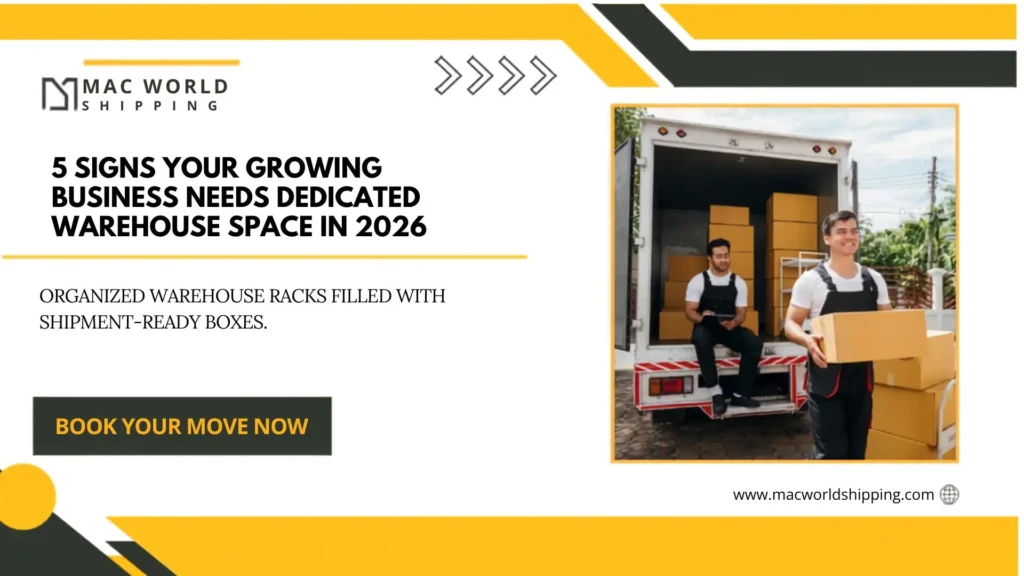
5 Signs Your Growing Business Needs Dedicated Warehouse Space in 2026

Introduction Every growing business hits a breaking point with storage. What started as a small back-room shelf slowly turns into stacked boxes in hallways, overflow bins near the reception desk, and inventory scattered across two or three locations just to make things fit. If this sounds familiar, it might be time to stop patching the problem and start looking for dedicated warehouse space. A storeroom works fine when you’re small. It’s cheap, it’s close, and it feels manageable when you only have a few hundred SKUs and a handful of orders a day. But as order volumes rise, your product catalog expands, and customer expectations around delivery speed keep climbing, that same storeroom quietly becomes a bottleneck. It slows down fulfillment, frustrates your team, and eats into your profits in ways that don’t always show up clearly on a balance sheet — until the damage is already done. In 2026, with same-day and next-day delivery becoming the norm rather than the exception, businesses that delay this decision often fall behind competitors who scale smarter and faster. The good news is that the warning signs are usually visible long before a business actually runs into a crisis. You just have to know what to look for. Here are five clear signs it’s time to move from a storeroom to a dedicated warehouse — plus what to think about before you make the switch. 1. You’re Constantly Running Out of Storage Space The most obvious sign is also the simplest one — you’ve physically run out of room. If your team is stacking boxes in walkways, renting extra closet space down the street, or turning away restocks because there’s nowhere to put them, your storeroom has already outgrown its original purpose. This isn’t just a space problem; it’s an operational one. Cramped storage leads to disorganized inventory, which in turn leads to slower picking times, misplaced stock, and even damaged goods from improper stacking or overcrowding. Employees start spending more time moving things out of the way just to reach what they actually need, which quietly drains productivity every single day. There’s also a safety angle that’s easy to overlook. Overstuffed storerooms with blocked walkways and precariously stacked boxes are a genuine hazard — for staff and for the goods themselves. A dedicated warehouse gives you the room to organize inventory logically, whether that’s by category, order frequency, seasonal demand, or SKU velocity, instead of squeezing everything into whatever gap happens to be free that week. 2. Order Fulfillment Delays Are Increasing Are customers waiting longer for their orders than they used to? Are your “same-day dispatch” promises slipping to next-day, or next-day slipping to two or three days? Fulfillment delays are rarely about your team working slower — they’re usually a symptom of poor storage layout and lack of systemized space. When staff have to dig through disorganized shelves, walk back and forth between multiple storage rooms, or search through unlabeled boxes to find one item, every single order takes longer to pack and ship. Multiply that by dozens or hundreds of orders a day, and the cumulative time loss becomes massive. In a competitive 2026 market where fast delivery is a major factor in customer retention, slow fulfillment can directly cost you repeat business and damage your reputation through negative reviews. A dedicated warehouse, designed with proper aisles, clearly labeled zones, and efficient picking paths, can cut fulfillment time significantly — often by half or more — simply because everything has a designated, findable place. Some businesses also use this transition to introduce batch picking or zone picking strategies, which are nearly impossible to implement in a cramped storeroom. 3. Inventory Management Has Become a Nightmare If you’re relying on spreadsheets, sticky notes, or plain memory to track what’s in stock, you’re not alone — but you’re also setting yourself up for costly and avoidable mistakes. Overselling out-of-stock items, double-ordering products you already have plenty of, or discovering expired or obsolete inventory months later tucked behind other boxes are all classic signs that your current storage setup can’t support proper inventory management. Dedicated warehouse space typically comes with the room needed to implement real inventory management systems — barcode scanning, a Warehouse Management System (WMS), RFID tracking, or even simple but structured shelf-labeling systems. These tools only work well when there’s enough physical space to organize inventory by dedicated zones. Trying to run a WMS out of a cluttered, mixed-use storeroom is a bit like trying to organize a library with no shelves — the software can only do so much if the physical space doesn’t support it. Better inventory visibility also means fewer surprises. You’ll know exactly what’s in stock, what’s low, and what needs reordering — instead of finding out the hard way when a customer places an order you can’t fulfill. 4. Your Storeroom Is Costing You More Than It Saves It’s easy to assume a storeroom is the “cheap” option simply because you’re not paying rent for a separate facility. But hidden costs add up fast: wasted staff hours searching for products, damaged inventory from improper stacking, missed sales due to stockouts you didn’t catch in time, higher insurance premiums from safety hazards created by overcrowded spaces, and even lost opportunities because your office or retail space is being eaten up by boxes instead of being used productively. There’s also the cost of inefficiency that rarely gets tracked. Every hour an employee spends hunting for a misplaced item is an hour not spent on customer service, sales, or growth-focused work. Over a year, that adds up to a significant, invisible expense. When you actually calculate the real cost of these inefficiencies — lost time, lost sales, damaged goods, and lost productivity — a dedicated warehouse often turns out to be the more economical choice, not the more expensive one. It’s not an added expense; it’s an investment that pays for itself through smoother operations, fewer costly errors, and a team that can finally focus on

Amazon UAE noon fulfillment guide for dubai sellers
Blog

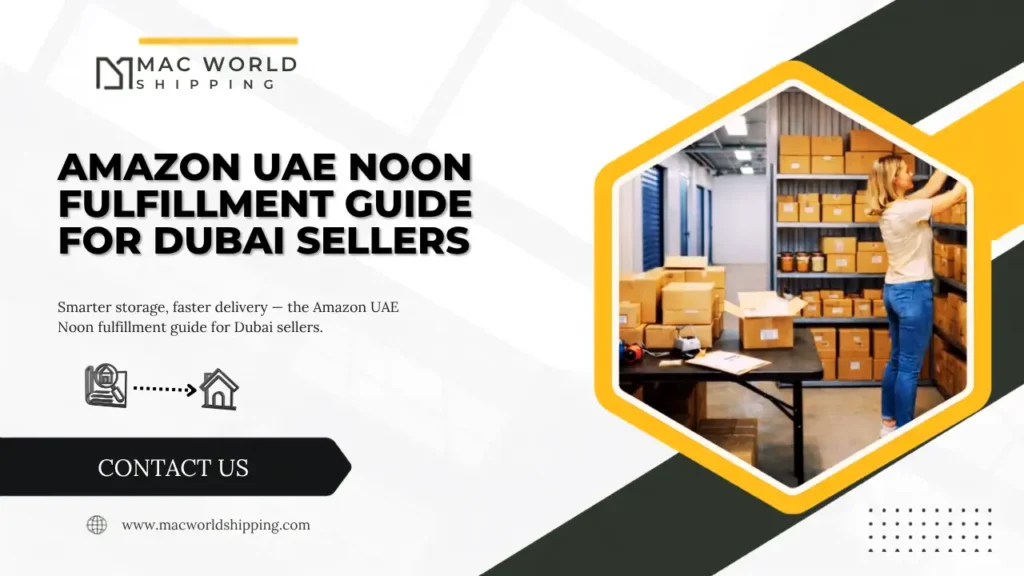
Amazon UAE Noon Fulfillment Guide for Dubai Sellers

Introduction If you’re selling on Amazon UAE or Noon, you already know the products aren’t the hard part — fulfillment is. Late deliveries, stockouts, and storage headaches quietly kill more seller accounts than bad reviews ever do. As Dubai’s e-commerce market keeps growing (UAE online retail is projected to keep climbing well past 2026), sellers who master Amazon UAE Noon fulfillment are the ones scaling profitably, while everyone else is stuck firefighting warehouse chaos. This guide breaks down exactly how to simplify inventory storage and fulfillment in Dubai — without overspending on logistics or losing your Buy Box to faster competitors. Why Fulfillment Is the Real Battleground for UAE Sellers Amazon and Noon both reward speed. Fast Track badges, Prime eligibility, and top search placement all hinge on how quickly and reliably you can get orders out the door. A seller with average products but excellent fulfillment consistently outperforms a seller with better products and slow shipping. That’s the core of Amazon UAE Noon fulfillment: it’s not just a backend operation, it’s a ranking and conversion factor. Both platforms’ algorithms favor listings with: Low late-shipment rates Consistent stock availability Fast delivery windows (same-day or next-day in Dubai and Abu Dhabi) Low order defect and cancellation rates If your inventory system can’t support this, your organic visibility suffers — regardless of how well-optimized your listing copy is. The Two Fulfillment Models: FBA/Noon Express vs. Self-Fulfillment Amazon FBA and Noon Express (Fulfilled by Noon) Both marketplaces offer their own logistics networks. Amazon’s FBA (Fulfillment by Amazon) and Noon’s “Fulfilled by Noon” (FBN) let you ship bulk inventory into their warehouses, and they handle picking, packing, and delivery. Pros: Prime/Express badge eligibility Handled returns and customer service Access to same-day delivery zones in Dubai Cons: Storage fees increase during high season (especially around White Friday and Ramadan) Less control over inventory condition and packaging Long-term storage penalties for slow-moving SKUs Self-Fulfillment (Seller-Fulfilled or Third-Party 3PL) Many Dubai-based sellers use a hybrid model: storing inventory with a local third-party logistics (3PL) provider and fulfilling orders themselves or through a courier partner like Aramex, SMSA, or a Dubai-based fulfillment center. Pros: Lower fixed storage costs for slower SKUs More flexibility with packaging and branding Easier to manage across both Amazon UAE and Noon simultaneously Cons: You’re responsible for delivery speed and returns Requires tighter internal systems to avoid stockouts Most successful multi-platform sellers in the UAE don’t pick just one model — they split inventory strategically: fast-moving bestsellers go through FBA/FBN, while slower or bulkier items are handled via a local 3PL. Simplifying Inventory Storage in Dubai: A Practical Framework 1. Centralize Your Inventory Data The single biggest mistake sellers make is managing Amazon and Noon stock in separate spreadsheets. When you’re running Amazon UAE Noon fulfillment across two platforms, disconnected inventory tracking almost guarantees overselling or stockouts. Use inventory management software (like Sellerboard, Zoho Inventory, or a dedicated multi-channel tool) that syncs stock levels across both marketplaces in real time. 2. Forecast Demand Before You Restock Dubai’s shopping calendar is seasonal and sharp — White Friday, Ramadan, Eid, and back-to-school periods can spike demand 3-5x in days. Build a simple demand forecast based on: Last 90 days of sales velocity Platform-specific promotional calendars Lead time from your supplier to a Dubai warehouse This prevents both overstocking (which triggers storage fees) and understocking (which tanks your ranking). 3. Choose a Warehouse Location Strategically If you’re using a 3PL, warehouse proximity to Dubai’s major distribution hubs (like Jebel Ali or Dubai South) directly affects your delivery speed and cost. A warehouse 10 minutes from a courier hub can shave a full day off delivery times compared to one on the city’s outskirts. 4. Audit Slow-Moving Stock Monthly Both Amazon and Noon charge long-term storage fees for inventory that sits too long. Run a monthly audit and either discount, bundle, or liquidate SKUs that haven’t moved in 60-90 days. This keeps your storage costs lean and your account metrics healthy. Fulfillment Speed: What Dubai Buyers Expect in 2026 UAE shoppers have some of the highest delivery expectations globally, largely because same-day delivery is now standard in Dubai and Abu Dhabi. To stay competitive: – Aim for same-day or next-day delivery  within Dubai city limits- Keep dispatch time under 24 hours for all self-fulfilled orders- Monitor your late dispatch rate weekly — both platforms penalize sellers who slip above 4%Sellers who consistently hit these benchmarks see measurably better placement in both Amazon UAE and Noon search results, since fulfillment reliability is now a direct ranking signal on both platforms. Common Mistakes That Hurt UAE Sellers 1. Treating Amazon and Noon inventory as one pool without buffer stock — a sudden spike on one platform can leave the other out of stock.2. Ignoring VAT and customs documentation for cross-border stock, which delays inbound shipments to fulfillment centers.3. Underestimating Ramadan and White Friday lead times — suppliers and freight get backed up weeks in advance.4. Not tracking storage fees against margin — some SKUs quietly become unprofitable once storage costs are factored in. Building a Simple, Scalable System 1. Sync inventory across Amazon UAE and Noon using one dashboard.2. Split SKUs between FBA/FBN and a local Dubai 3PL based on sales velocity.3. Forecast monthly, not just reactively restocking after a stockout.4. Review storage and fulfillment fees quarterly to catch margin leaks early.5. Benchmark your dispatch and delivery times against platform targets every month.Fulfillment doesn’t have to be complicated — it just has to be consistent. The sellers winning in Dubai’s e-commerce space right now aren’t necessarily the ones with the biggest catalogs; they’re the ones with the tightest operations behind the scenes. What This Amazon UAE Noon Fulfillment Guide for Dubai Sellers Covers This guide walks Dubai-based sellers through the full fulfillment picture on both Amazon UAE and Noon — not just the theory, but the day-to-day decisions that affect your bottom line. Specifically, it covers: Fulfillment models — a side-by-side comparison of Amazon FBA, Noon’s Fulfilled by Noon

temperature controlled warehousing
Blog

Temperature-Controlled Warehousing in Dubai | Guide

Introduction Dubai’s desert climate is one of the harshest environments on earth for perishable and heat-sensitive goods. With summer temperatures regularly climbing past 45°C, businesses that deal in flowers, food, or perfume face a constant battle against heat, humidity, and spoilage. This is where temperature-controlled warehousing becomes a non-negotiable part of doing business, not a luxury add-on. Whether you’re importing fresh-cut roses from Kenya, distributing frozen seafood across the UAE, or storing bulk fragrance concentrates, the right cold storage Dubai facility can be the difference between a profitable shipment and a total write-off. In this guide, we break down exactly why temperature-controlled warehousing matters, what it protects against, and what to look for when choosing a provider. What Is Temperature-Controlled Warehousing? Temperature-controlled warehousing refers to storage facilities engineered to maintain specific temperature and humidity ranges, regardless of outside weather conditions. Unlike standard dry warehouses, these facilities typically offer multiple zones, such as: – Chilled storage** (2°C to 8°C) — ideal for fresh flowers, dairy, and produce  – Frozen storage** (-18°C and below) — for meat, seafood, and frozen goods  – Cool/ambient-controlled storage** (15°C to 25°C) — suited for perfumes, cosmetics, and pharmaceuticals Each zone is monitored continuously using sensors and automated alerts, ensuring goods never drift outside safe thresholds even during power fluctuations or peak summer heat. Why Dubai’s Climate Makes Cold Storage Essential Dubai’s extreme heat and high humidity accelerate spoilage, chemical breakdown, and bacterial growth far faster than in temperate climates. A delivery truck sitting on the tarmac at Jebel Ali or Al Maktoum Airport for even 20 minutes without climate control can expose sensitive cargo to damaging temperatures. For businesses operating in or shipping through the UAE, **temperature-controlled warehousing** isn’t just about product quality, it’s about survival in a market where a single batch of spoiled goods can mean significant financial loss and reputational damage. Key Features to Look for in a Cold Storage Facility in Dubai Not all warehouses labeled “temperature-controlled” offer the same level of protection. When evaluating a provider, look for: 1. Multi-zone capability The facility should support different temperature ranges under one roof, useful if your business handles a mix of products. 2. Real-time monitoring and alerts IoT-enabled sensors that track temperature and humidity around the clock, with instant alerts for any deviation. 3. Backup power systems Reliable generators or redundant cooling systems to prevent losses during outages, especially important during Dubai’s peak summer load on the grid. 4. Proximity to ports and airports Facilities near Jebel Ali Port or Dubai South reduce transit time between arrival and controlled storage, minimizing exposure to ambient heat. 5. Regulatory compliance and certifications Look for facilities certified under HACCP, ISO 22000, or similar food and pharma safety standards, particularly important for food and cosmetic importers. 6. Scalable storage options Whether you need a few pallet positions or a dedicated bonded warehouse space, flexibility matters as your business grows. Flowers: Preserving Freshness and Value Dubai is a major hub for the global flower trade, with Dubai Flower Centre handling millions of stems annually en route to markets across the Middle East, Europe, and Asia. Fresh flowers are extremely perishable, and improper storage can cause: – Petal wilting and discoloration within hours- Shortened vase life, reducing resale value- Bacterial growth that spreads through entire shipments A dedicated flower cold storage facility, typically maintained between 2°C and 4°C with controlled humidity, slows respiration rates and preserves the delicate structure of blooms until they reach the retailer or end customer. Food: Safety, Compliance, and Shelf Life The UAE has strict food safety regulations enforced by Dubai Municipality and the Emirates Authority for Standardization and Metrology (ESMA). Any lapse in the cold chain, whether for meat, seafood, dairy, or produce, can lead to: – Regulatory fines and product recalls- Bacterial contamination risks like Salmonella or Listeria- Reduced shelf life and increased waste Proper **cold storage Dubai** solutions ensure HACCP-compliant handling from the moment goods arrive at port or airport until they reach supermarket shelves or restaurant kitchens. For food importers and distributors, this compliance isn’t optional, it’s a legal requirement tied directly to licensing. Why Choose Mac World Shipping for Warehouse Storage in Dubai? Choosing the right warehouse partner can make inventory management and order fulfillment easier. Mac World Shipping provides reliable warehouse storage solutions designed to support businesses with secure storage, inventory handling, and logistics support. What Mac World Shipping Can Help With Secure Warehouse Storage – Keep your products and inventory in a safe and organized facility. Flexible Storage Solutions – Storage options to support different inventory volumes and business requirements. Inventory Management – Better organization and handling of stored goods. E-Commerce Support – Suitable for online businesses that need reliable storage and fulfillment support. Order Fulfillment – Support with picking, packing, and preparing orders for dispatch. Distribution Support – Help move inventory from the warehouse to customers and business locations. Integrated Logistics – Connect warehousing with transportation, freight, and distribution services. Scalable Solutions – Storage and logistics support that can grow along with your business. Final Thoughts For flower, food, and perfume businesses operating in Dubai’s demanding climate, temperature-controlled warehousing isn’t just a storage solution, it’s a core part of protecting product quality, meeting regulatory requirements, and safeguarding your bottom line. Investing in the right cold storage partner today can save significant losses tomorrow, while building the kind of reliability customers and regulators expect from a serious UAE business. Contact Us

Warehouse Storage Dubai
Blog, Warehouse Storage

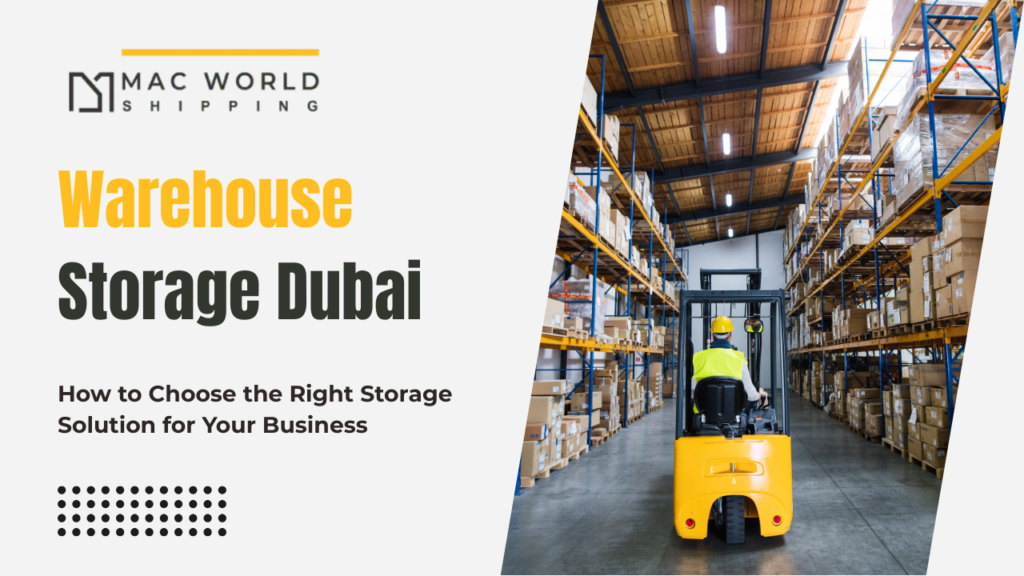
How to Choose the Best Warehouse Storage in Dubai

Introduction Finding the right warehouse storage in Dubai is important for businesses that need secure, organized, and cost-effective space for their inventory. Whether you run an e-commerce business, retail company, importer, distributor, or manufacturing business, the right warehouse can help you manage stock efficiently and improve your supply chain. This guide explains the key factors to consider when choosing a warehouse storage solution in Dubai. What Is Warehouse Storage? Warehouse storage is a service that provides businesses with dedicated or shared space to store products, raw materials, equipment, and inventory. Depending on the provider, warehouse services may also include inventory management, order fulfillment, packing, distribution, and transportation. For growing businesses, professional warehouse storage can reduce the need to manage a warehouse independently and provide greater flexibility as inventory levels change. Why Choose Professional Warehouse Storage in Dubai? Dubai is a major logistics and trading hub, making efficient warehousing important for businesses operating across the UAE and international markets. Professional warehouse storage can help businesses: Reduce warehouse management costs Store inventory securely Improve inventory organization Manage seasonal stock efficiently Support e-commerce fulfillment Reduce handling and distribution delays Scale storage capacity as the business grows 7 Factors to Consider When Choosing Warehouse Storage in Dubai 1. Warehouse Location Location is one of the most important factors when selecting a warehouse. Choose a facility that provides convenient access to your customers, suppliers, ports, airports, and major road networks. A strategically located warehouse can help reduce transportation time and delivery costs. For businesses serving customers across Dubai and the UAE, easy access to major logistics routes can be especially valuable. 2. Storage Capacity and Flexibility Consider how much space you currently need and how your inventory may grow in the future. Ask the warehouse provider about: Available storage capacity Pallet storage Shelving and racking Bulk storage Flexible storage options Seasonal storage capacity A flexible warehouse solution allows you to increase or reduce storage according to your business requirements. 3. Security and Safety Your inventory should be stored in a secure environment. Before selecting a warehouse, check whether the facility provides: CCTV monitoring Controlled access Security personnel Fire protection systems Proper lighting Safe loading and unloading areas These measures help protect inventory from unauthorized access, damage, and other risks. 4. Inventory Management Good inventory management is essential for businesses handling large quantities of products. Ask whether the warehouse provider offers inventory tracking and management services. Accurate inventory records can help businesses know what products are available, where they are stored, and when stock needs to be replenished. For e-commerce businesses, real-time or regular inventory updates can also help prevent stock-related order issues. 5. Order Fulfillment Services If you operate an e-commerce business, warehouse storage alone may not be enough. Look for providers that can support: Inventory receiving Product storage Picking Packing Order processing Dispatch Delivery coordination Combining warehousing and fulfillment can simplify your operations and allow you to focus more on sales and business growth. 6. Transportation and Distribution Support A warehouse becomes more valuable when it connects efficiently with transportation and distribution services. Check whether the provider can support: Local deliveries UAE-wide distribution Freight forwarding Last-mile delivery Import and export logistics Shipment coordination Having storage and logistics services under one provider can simplify supply chain management. 7. Pricing and Service Terms Compare the total cost rather than choosing a warehouse based only on the lowest storage price. Ask about: Storage charges Handling fees Receiving charges Picking and packing costs Delivery charges Minimum storage requirements Contract duration Additional service fees A clear pricing structure helps you understand the actual cost of your warehouse operation. Warehouse Storage for E-Commerce Businesses in Dubai E-commerce businesses often experience changing inventory levels and increasing order volumes. Managing storage, packing, and dispatch internally can become difficult as the business grows. A professional warehouse storage provider can help e-commerce businesses manage: Product storage Inventory tracking Order picking Packing Dispatch Distribution This can help business owners reduce operational workload and focus on marketing, sales, and customer service. Questions to Ask Before Choosing a Warehouse Before signing a warehouse storage agreement, ask the provider: Where is the warehouse located? How much storage space is available? Is the storage flexible? How is inventory tracked? What security measures are available? Do you provide pick-and-pack services? Can you support e-commerce fulfillment? Do you provide transportation and distribution? What are the storage and handling charges? Are there any minimum contract or storage requirements? Comparing these factors can help you select a warehouse that matches your operational and budget requirements. Why Choose Mac World Shipping for Warehouse Storage in Dubai? Choosing the right warehouse partner can make inventory management and order fulfillment easier. Mac World Shipping provides reliable warehouse storage solutions designed to support businesses with secure storage, inventory handling, and logistics support. What Mac World Shipping Can Help With Secure Warehouse Storage – Keep your products and inventory in a safe and organized facility. Flexible Storage Solutions – Storage options to support different inventory volumes and business requirements. Inventory Management – Better organization and handling of stored goods. E-Commerce Support – Suitable for online businesses that need reliable storage and fulfillment support. Order Fulfillment – Support with picking, packing, and preparing orders for dispatch. Distribution Support – Help move inventory from the warehouse to customers and business locations. Integrated Logistics – Connect warehousing with transportation, freight, and distribution services. Scalable Solutions – Storage and logistics support that can grow along with your business. A Reliable Warehouse Partner for Your Business Whether you are an e-commerce seller, retailer, importer, distributor, or growing business, Mac World Shipping can help simplify your warehouse and logistics operations. Instead of managing storage, inventory, and distribution separately, businesses can work with Mac World Shipping for an integrated logistics solution in Dubai. Looking for reliable warehouse storage in Dubai? Contact Mac World Shipping to discuss your storage and logistics requirements. Contact Us

contract logistics Dubai services
Blog

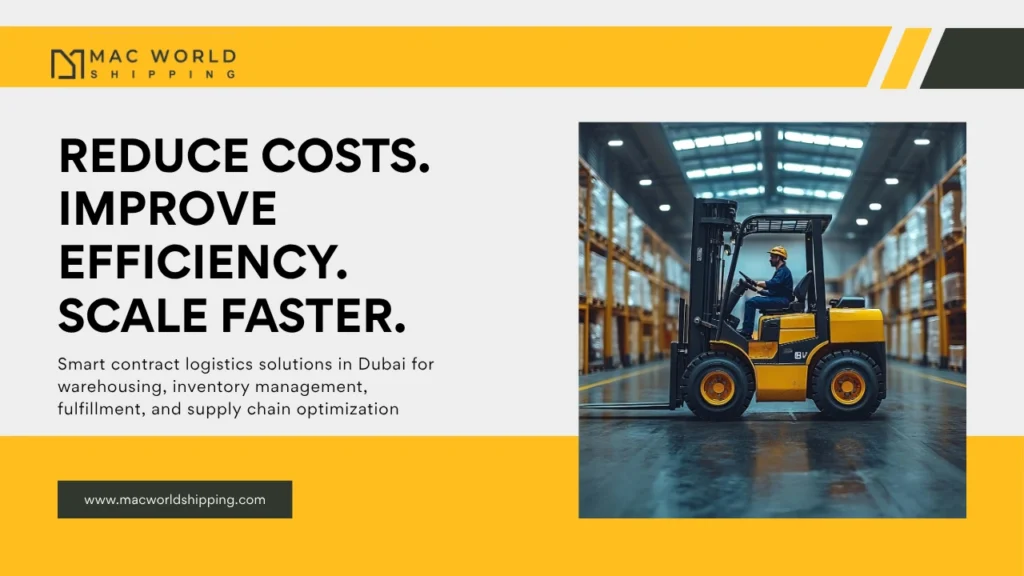
How Contract Logistics Dubai Services Help Businesses Reduce Costs and Improve Efficiency

Introduction In today’s competitive business environment, companies are constantly looking for ways to improve operational efficiency while controlling costs. Managing warehousing, transportation, inventory, and order fulfillment internally can be expensive and time-consuming, especially for growing businesses. This is where contract logistics Dubai services help businesses reduce costs and improve efficiency by providing integrated logistics solutions tailored to specific business requirements. Dubai has emerged as one of the world’s leading logistics hubs, offering advanced infrastructure, strategic connectivity, and professional logistics providers that support businesses across multiple industries. By outsourcing logistics operations to experienced partners, companies can streamline supply chains, improve customer satisfaction, and focus on their core business activities. What Are Contract Logistics Services? Contract logistics refers to outsourcing logistics operations to a specialized service provider under a long-term agreement. These services typically include: Warehousing and storage Inventory management Transportation management Order fulfillment Distribution services Reverse logistics Supply chain optimization Instead of managing multiple logistics functions independently, businesses can rely on a single provider for complete operational support. This makes contract logistics Dubai an increasingly popular solution for businesses seeking efficiency and scalability. Why Businesses Are Turning to Contract Logistics in Dubai Modern supply chains have become more complex due to increasing customer expectations, growing e-commerce demand, and global trade expansion. Businesses often face challenges such as: Rising operational costs Inventory management issues Delivery delays Lack of warehouse space Resource constraints Contract logistics providers help solve these challenges through professional logistics expertise and advanced infrastructure. How Contract Logistics Dubai Services Help Businesses Reduce Costs and Improve Efficiency One of the biggest reasons companies outsource logistics is the significant cost savings and operational improvements they achieve. Let’s explore the major benefits. 1. Lower Warehousing and Infrastructure Costs Operating a warehouse requires substantial investment. Businesses must pay for: Warehouse rent Storage equipment Utilities Security systems Maintenance costs By outsourcing logistics, companies gain access to professional warehousing facilities without investing in their own infrastructure. Contract logistics providers already have the required facilities, allowing businesses to reduce fixed costs significantly. This is one of the primary ways contract logistics Dubai services help businesses reduce costs and improve efficiency. 2. Improved Inventory Management Poor inventory management can result in: Overstocking Stock shortages Lost sales Increased carrying costs Professional logistics providers use advanced inventory systems to improve visibility and accuracy. Benefits include: Real-time inventory tracking Better stock forecasting Faster stock replenishment Reduced inventory errors Effective inventory management improves cash flow while reducing unnecessary storage expenses. 3. Faster Order Fulfillment Today’s customers expect fast and reliable deliveries. Contract logistics providers optimize fulfillment operations through: Efficient warehouse layouts Automated picking processes Organized inventory systems Delivery coordination Faster order processing leads to: Improved customer satisfaction Better online reviews Increased repeat business This directly contributes to business growth. 4. Access to Logistics Expertise Managing logistics internally requires specialized knowledge and experienced personnel. Contract logistics providers bring expertise in: Supply chain planning Transportation management Inventory optimization Customs compliance Distribution strategies Businesses benefit from industry best practices without needing to build internal logistics teams. 5. Scalable Logistics Solutions Business needs change throughout the year. Demand may increase during: Holiday seasons Promotional campaigns Product launches Market expansions Contract logistics providers offer flexible solutions that scale according to business requirements. This eliminates the need for permanent infrastructure investments while ensuring operational readiness during peak periods. Role of Contract Logistics in Supply Chain Management Supply chain efficiency directly affects profitability. Contract logistics providers help improve: Procurement Efficiency Coordinating inventory movement from suppliers to warehouses. Inventory Optimization Maintaining ideal stock levels while reducing carrying costs. Distribution Management Ensuring products reach customers quickly and accurately. Returns Handling Managing reverse logistics efficiently. These improvements create a more resilient and cost-effective supply chain. Industries That Benefit from Contract Logistics Services Contract logistics solutions are valuable across multiple industries. E-Commerce Businesses Inventory storage Fulfillment services Delivery support Retail Businesses Stock replenishment Distribution management FMCG Companies Fast-moving inventory handling Demand forecasting Manufacturing Companies Raw material storage Finished goods distribution Healthcare and Pharmaceuticals Specialized storage Compliance support Each industry benefits from customized logistics strategies. Why Dubai Is a Leading Contract Logistics Hub Dubai offers several advantages for businesses seeking logistics support. Strategic Geographic Location Dubai connects Asia, Europe, and Africa, making global distribution more efficient. Advanced Infrastructure World-class airports, seaports, and transportation networks support seamless logistics operations. Business-Friendly Environment Government initiatives continue to strengthen Dubai’s logistics sector. Growing E-Commerce Market Increasing online shopping activity has driven demand for advanced logistics services. These advantages make Dubai one of the most attractive locations for logistics outsourcing. Technology Driving Modern Contract Logistics Modern logistics providers leverage technology to improve efficiency. Key innovations include: Warehouse Management Systems (WMS) Providing real-time inventory visibility. Transportation Management Systems (TMS) Optimizing delivery routes and transportation costs. Artificial Intelligence Improving demand forecasting and operational planning. Data Analytics Supporting better business decisions. Technology continues to play a critical role in logistics efficiency and customer satisfaction. Common Challenges Businesses Face Without Contract Logistics Companies managing logistics independently often struggle with: High operational costs Inventory inaccuracies Delivery delays Limited scalability Resource shortages As businesses grow, these challenges become more difficult to manage internally. Contract logistics providers help eliminate these operational bottlenecks. Future Trends in Contract Logistics (2026 and Beyond) The logistics industry continues to evolve rapidly. Key trends include: AI-powered warehouse automation Smart inventory systems Sustainable logistics practices Real-time visibility solutions Predictive supply chain analytics Businesses that embrace these innovations will gain significant competitive advantages. How Mac World Shipping Supports Businesses with Contract Logistics Mac World Shipping provides comprehensive contract logistics solutions tailored to the needs of modern businesses. Services include: Warehouse storage solutions Private warehouse facilities Inventory management Fulfillment services Distribution support Refrigerated storage Transportation coordination By partnering with Mac World Shipping, businesses can simplify logistics operations, improve efficiency, and focus on growth while experienced professionals manage their supply chain requirements. Conclusion Contract logistics Dubai services help businesses reduce costs and improve efficiency by providing professional warehousing, inventory management, fulfillment, and transportation support. As supply chains become more complex and customer expectations continue

Sea Freight Dubai vs Air Freight
Blog

Sea Freight Dubai vs Air Freight: Which Shipping Solution Is Best for Your Business?

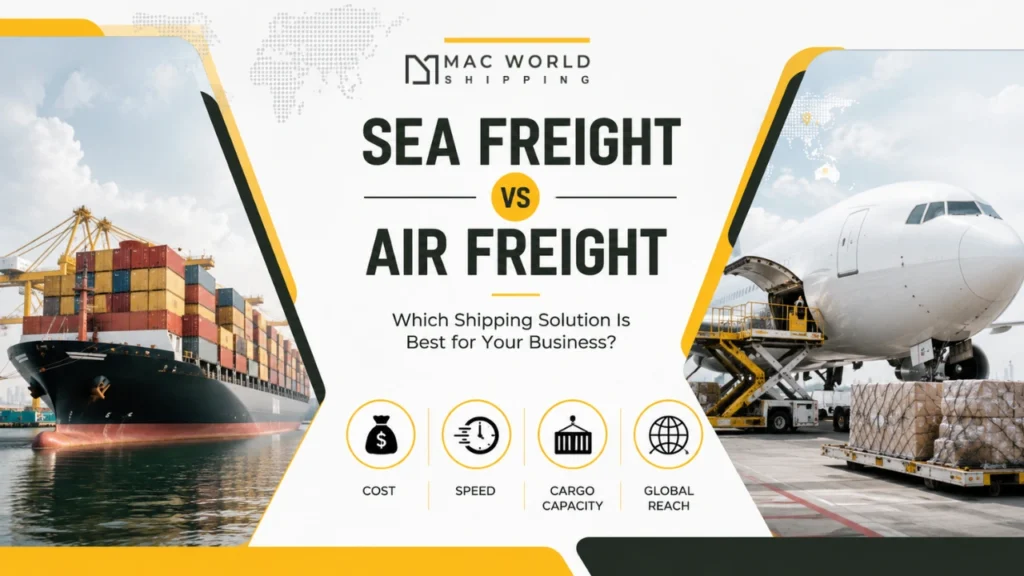
Introduction Choosing the right shipping method is one of the most important decisions businesses make when managing international logistics. Whether you are importing raw materials, exporting finished goods, or expanding into new global markets, selecting between sea freight and air freight can significantly impact costs, delivery times, and customer satisfaction. When evaluating Sea Freight Dubai vs Air Freight, businesses must consider multiple factors, including shipment size, urgency, budget, cargo type, and supply chain objectives. Dubai has become one of the world’s leading logistics hubs, offering excellent connectivity through both maritime and aviation networks. As global trade continues to evolve, understanding the differences between these shipping methods helps businesses make informed decisions that support growth and operational efficiency. This guide explores the advantages, disadvantages, and ideal use cases for both options to help determine which solution best fits your business needs. Understanding Sea Freight and Air Freight Before comparing Sea Freight Dubai vs Air Freight, it is important to understand how each transportation method works. What Is Sea Freight? Sea freight involves transporting cargo via ocean vessels using containers or specialized shipping equipment. It is one of the most widely used methods for international trade due to its affordability and ability to handle large cargo volumes. Sea freight services typically include: Full Container Load (FCL) Less than Container Load (LCL) Breakbulk cargo Project cargo Heavy equipment transportation Sea freight is ideal for businesses that prioritize cost savings over delivery speed. What Is Air Freight? Air freight refers to transporting goods through commercial airlines or dedicated cargo aircraft. Air freight services are commonly used for: Time-sensitive shipments High-value products Perishable goods Medical supplies Urgent inventory replenishment Air freight provides significantly faster transit times compared to sea freight but generally comes with higher shipping costs. Sea Freight Dubai vs Air Freight: Key Differences Understanding the key differences between Sea Freight Dubai vs Air Freight can help businesses select the most suitable logistics solution. Shipping Cost Cost is often the first factor businesses evaluate. Sea Freight Cost Advantages Sea freight is generally the most economical option for international shipping, especially for: Bulk cargo Heavy goods Large shipments Non-urgent deliveries Businesses transporting large quantities of products can achieve substantial savings through sea freight. Air Freight Cost Considerations Air freight is considerably more expensive because costs are based on: Cargo weight Cargo volume Fuel expenses Airport handling fees While more costly, air freight offers speed and reliability that can justify the investment for urgent shipments. Delivery Speed One of the biggest differences in the Sea Freight Dubai vs Air Freight comparison is transit time. Air Freight Delivery Speed Air freight offers rapid transportation, often delivering shipments within: 1–3 days internationally 24–48 hours regionally This makes air freight ideal for urgent business requirements. Sea Freight Transit Time Sea freight typically requires: Several days to several weeks Longer customs and port processing times Although slower, sea freight remains suitable for planned inventory replenishment and bulk cargo movement. Which Option Is Better for Large Shipments? Sea Freight for Bulk Cargo Sea freight is highly efficient for transporting: Industrial equipment Machinery Construction materials Consumer goods in large quantities Containerized shipping allows businesses to move significant cargo volumes at relatively low costs. Air Freight Capacity Limitations Aircraft cargo space is limited compared to cargo vessels. Very large or oversized shipments may: Exceed aircraft capacity restrictions Incur substantial shipping costs Require specialized handling For this reason, sea freight is often preferred for large-scale shipments. Cargo Types and Shipping Requirements When considering Sea Freight Dubai vs Air Freight, cargo characteristics play a major role. Products Best Suited for Air Freight Air freight is ideal for: Electronics Luxury goods Pharmaceuticals Medical equipment Perishable products Fashion items These products often require fast transportation and enhanced security. Products Best Suited for Sea Freight Sea freight is commonly used for: Furniture Industrial machinery Building materials Automotive parts Consumer goods Bulk commodities These products can tolerate longer transit times and benefit from lower transportation costs. Reliability and Scheduling Air Freight Reliability Airlines generally operate on fixed schedules with predictable departure and arrival times. Benefits include: Reduced transit uncertainty Faster customs processing Better shipment visibility This reliability supports businesses that depend on strict delivery timelines. Sea Freight Scheduling Challenges Sea freight schedules can sometimes be affected by: Weather conditions Port congestion Customs delays Vessel scheduling adjustments However, proper logistics planning can help mitigate these challenges. Environmental Impact Sustainability is becoming increasingly important in supply chain management. Sea Freight Sustainability Sea freight typically produces lower carbon emissions per ton of cargo transported compared to air freight. For businesses pursuing sustainability goals, sea freight may be the more environmentally responsible option. Air Freight Carbon Footprint Air transportation generates significantly higher emissions due to fuel consumption and aircraft operations. While air freight offers speed, businesses should consider its environmental impact when evaluating shipping options. Sea Freight Dubai vs Air Freight for E-Commerce Businesses The growth of e-commerce has transformed shipping requirements. When E-Commerce Businesses Choose Air Freight Air freight is often selected for: Fast-moving products Urgent stock replenishment Seasonal inventory requirements Premium customer delivery options Fast shipping can enhance customer satisfaction and competitive positioning. When E-Commerce Businesses Choose Sea Freight Sea freight is preferred for: Inventory restocking Bulk product imports Cost-effective logistics planning Many e-commerce companies use a combination of both shipping methods to balance speed and cost. Dubai’s Strategic Advantage in Global Shipping Dubai serves as one of the world’s most important logistics gateways. World-Class Ports Dubai’s maritime infrastructure supports efficient sea freight operations through: Modern container terminals Advanced cargo handling facilities Global shipping connections International Airports Dubai’s airports provide: Extensive cargo capacity Fast customs clearance Global air freight connectivity This dual advantage makes Dubai a leading choice for international logistics operations. Factors to Consider When Choosing Between Sea Freight and Air Freight Choose Sea Freight If: Cost reduction is a priority Shipments are large or heavy Delivery timelines are flexible Sustainability is important Choose Air Freight If: Speed is critical Products are high value Inventory shortages must be avoided

Warehousing and Distribution Dubai
Blog

Top Benefits of Warehousing and Distribution Dubai Solutions for Growing Companies

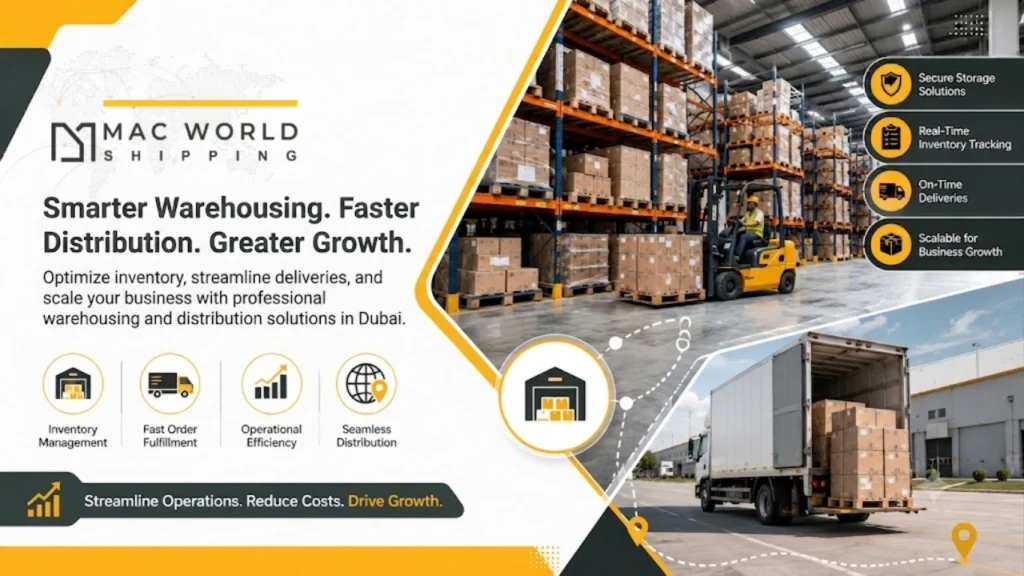
Introduction As businesses expand across local and international markets, managing inventory, fulfilling orders efficiently, and maintaining customer satisfaction become increasingly challenging. This is where Warehousing and Distribution Dubai solutions play a critical role. Dubai has established itself as one of the world’s leading logistics hubs, offering businesses access to advanced infrastructure, strategic trade routes, and professional supply chain services. For growing companies, efficient warehousing and distribution are no longer optional—they are essential for maintaining competitiveness and meeting customer expectations. Whether you operate in retail, e-commerce, manufacturing, healthcare, or import-export sectors, investing in professional Warehousing and Distribution Dubai services can streamline operations, reduce costs, and support sustainable growth. In this article, we explore the top benefits of warehousing and distribution services and why Dubai is the ideal location for businesses seeking to optimize their supply chain operations. What Are Warehousing and Distribution Services? Before exploring the benefits, it is important to understand the role of warehousing and distribution in supply chain management. Warehousing Services Warehousing involves the safe storage, management, and organization of inventory before products are shipped to customers, retailers, or distribution centers. Warehouse services typically include: Inventory storage Stock management Order picking and packing Inventory tracking Product handling Returns management Distribution Services Distribution focuses on moving products from warehouses to their final destinations efficiently and accurately. Distribution services often include: Transportation planning Delivery coordination Route optimization Shipment tracking Last-mile delivery support Together, Warehousing and Distribution Dubai solutions ensure products move seamlessly through the supply chain. Why Dubai Is a Leading Logistics Hub Dubai’s strategic location and world-class infrastructure make it one of the most attractive logistics destinations globally. Strategic Geographic Location Dubai connects major markets across: Middle East Asia Europe Africa This positioning allows businesses to serve multiple regions from a centralized logistics hub. Advanced Transportation Infrastructure Dubai offers access to: International airports Major seaports Modern road networks Free trade zones These logistics advantages support efficient supply chain operations and reduce transportation delays. Business-Friendly Environment The UAE government continues to invest heavily in logistics infrastructure and trade facilitation, creating an environment that supports business growth and international commerce. As a result, businesses leveraging Warehousing and Distribution Dubai services gain a competitive advantage in both regional and global markets. Top Benefits of Warehousing and Distribution Dubai Solutions 1. Improved Inventory Management One of the biggest advantages of professional warehousing services is better inventory control. Growing businesses often struggle with: Overstocking Stock shortages Inventory inaccuracies Product misplacement Professional warehouse management systems provide real-time inventory visibility, helping businesses monitor stock levels and make informed purchasing decisions. Accurate inventory management improves operational efficiency and reduces unnecessary costs. 2. Faster Order Fulfillment Today’s customers expect quick and reliable deliveries. A professionally managed Warehousing and Distribution Dubai solution enables businesses to: Process orders faster Reduce picking and packing errors Accelerate dispatch operations Improve delivery timelines Faster fulfillment contributes directly to customer satisfaction and repeat business. 3. Reduced Operational Costs Maintaining an in-house warehouse can be expensive. Businesses often face costs related to: Facility leasing Equipment purchases Warehouse staffing Security systems Inventory technology By partnering with a professional logistics provider, companies can access advanced warehousing infrastructure without significant capital investments. This allows businesses to focus resources on growth and core operations. 4. Enhanced Supply Chain Efficiency Supply chain disruptions can significantly impact business performance. Professional Warehousing and Distribution Dubai services improve supply chain efficiency by: Reducing delays Improving inventory visibility Streamlining product movement Enhancing communication across the supply chain An efficient supply chain ensures products reach customers on time while minimizing operational bottlenecks. 5. Scalability for Business Growth As businesses grow, their storage and distribution requirements evolve. One of the major benefits of professional logistics solutions is scalability. Companies can: Increase storage capacity Manage seasonal demand spikes Support product launches Expand into new markets Flexible warehousing solutions help businesses adapt quickly without investing in additional infrastructure. How Warehousing and Distribution Support E-Commerce Businesses The rapid growth of e-commerce has increased the demand for efficient logistics services. Online retailers must manage: Large inventory volumes Fast shipping expectations Product returns Seasonal demand fluctuations A professional Warehousing and Distribution Dubai solution helps e-commerce businesses maintain operational efficiency while delivering exceptional customer experiences. Faster Delivery Performance Strategically located warehouses reduce delivery times and improve customer satisfaction. Better Inventory Accuracy Real-time inventory management reduces stock discrepancies and improves order accuracy. Efficient Returns Management Warehousing providers often offer reverse logistics solutions, simplifying product returns and exchanges. Increased Product Security Protecting inventory is a priority for every business. Modern warehouse facilities include advanced security measures such as: CCTV surveillance Access control systems Fire protection systems Inventory monitoring technologies These features reduce risks associated with theft, damage, and inventory loss. Businesses can operate with confidence knowing their products are stored securely. Better Customer Satisfaction Customer satisfaction depends heavily on reliable order fulfillment. Professional Warehousing and Distribution Dubai services contribute to improved customer experiences through: Accurate order processing Faster deliveries Real-time shipment updates Reduced product damage Happy customers are more likely to become repeat buyers and recommend your business to others. Industries That Benefit from Warehousing and Distribution Dubai Services Retail Retailers rely on warehousing services to manage inventory efficiently and maintain stock availability. E-Commerce Online businesses require efficient storage and distribution systems to support high order volumes. Manufacturing Manufacturers use warehouses to store raw materials, components, and finished goods. Healthcare Healthcare organizations depend on secure storage and timely distribution of medical products and equipment. Import and Export Businesses International traders benefit from strategic warehouse locations that support efficient cargo handling and distribution. Technology’s Role in Modern Warehousing Technology is transforming the logistics industry. Leading Warehousing and Distribution Dubai providers utilize advanced systems to improve efficiency and visibility. Warehouse Management Systems (WMS) A WMS helps businesses: Track inventory in real time Improve stock accuracy Optimize warehouse operations Data Analytics Analytics tools provide valuable insights into: Inventory trends Demand forecasting Operational performance Automation Automation technologies improve: Order processing speed Picking accuracy Operational efficiency Businesses that embrace technology-driven warehousing gain a significant competitive advantage. Future Trends

Call Now Button